 Listen to the classics such as Bach’s Goldberg Variations performed by Glenn Gould and study harmonic analysis in order to discover the core of Bach’s harmonic language. While listening to Beethoven’s 9th Symphony conducted by Herbert Von Karajan you can observe the harmonic balance. Listen to Bill Evans and Miles Davis performing in Kind of Blue and take after their special tips and tricks which they are using in their performing style. You can choose to listen to the Beatles in order to get closer to the understanding of their harmonies and song structure.
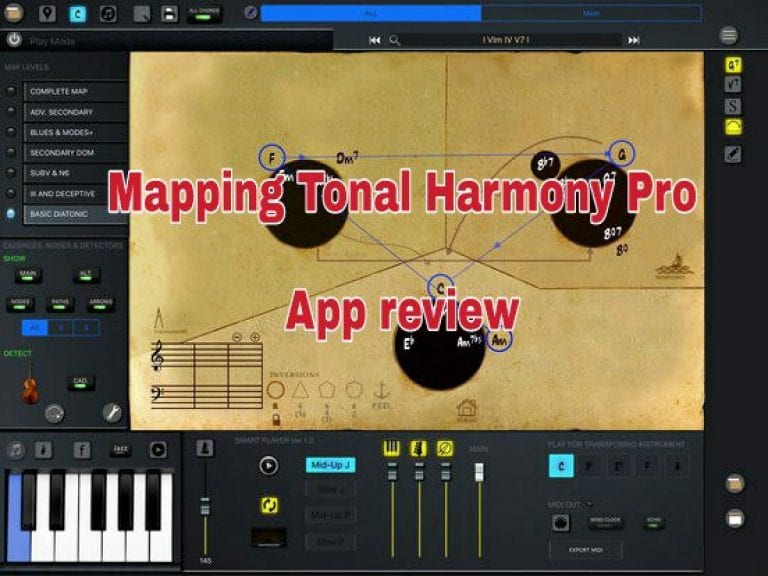
If you are not a student, you can start teaching your own Harmony Classes with the usage of the interactive map which contains all existing harmonic functions and cadences from the Diatonic Functions to Advanced Secondary Dominants, and Modulations.
This is only the smallest part of everything that this app can give you. There are no analogs for this kind of app on the market today and it would be really helpful for all music teachers and professors to make their job a little bit easier while teaching their students.
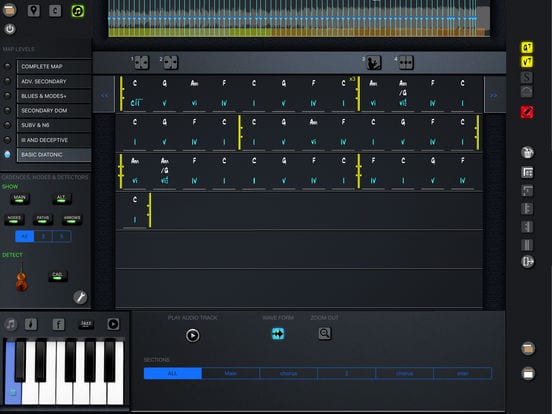
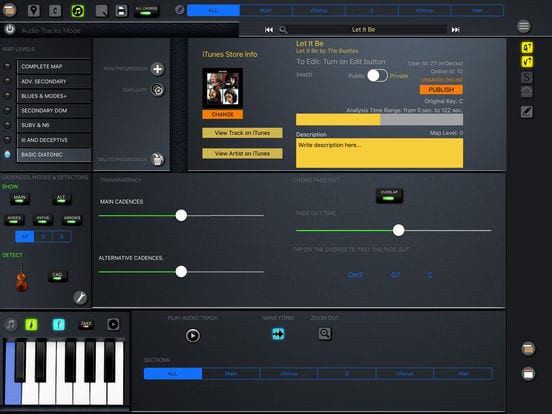
You have a chance to upload your favorite music from the iTunes library and enjoy studying the harmony of it.
Listen to the classics such as Bach’s Goldberg Variations performed by Glenn Gould and study harmonic analysis in order to discover the core of Bach’s harmonic language. While listening to Beethoven’s 9th Symphony conducted by Herbert Von Karajan you can observe the harmonic balance. Listen to Bill Evans and Miles Davis performing in Kind of Blue and take after their special tips and tricks which they are using in their performing style. You can choose to listen to the Beatles in order to get closer to the understanding of their harmonies and song structure.
If you are not a student, you can start teaching your own Harmony Classes with the usage of the interactive map which contains all existing harmonic functions and cadences from the Diatonic Functions to Advanced Secondary Dominants, and Modulations.
This is only the smallest part of everything that this app can give you. There are no analogs for this kind of app on the market today and it would be really helpful for all music teachers and professors to make their job a little bit easier while teaching their students.
You have a chance to upload your favorite music from the iTunes library and enjoy studying the harmony of it.
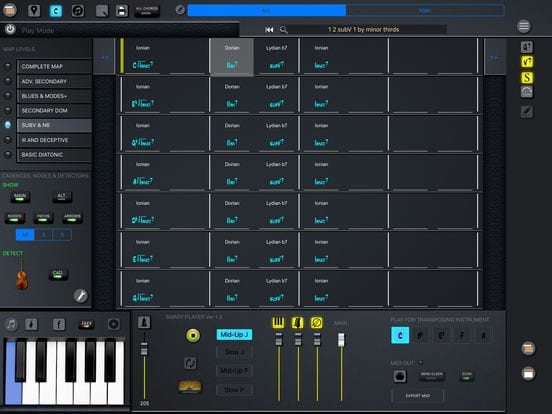
 There are seven levels of complexity in the map which suggests a wide range of functions (from the basic diatonic neighborhood to advanced secondary functions). By combining the studies of basic theories of classical music and jazz, you get a chance to become well trained in both styles.
Use Mapping Tonal Harmony Pro to improve your improvisation and ear-training skills. You will have to constantly analyze different types of melodies by all kinds of instruments, explore various harmonic paths. When you are making progress you can always share it online with other users.
There are seven levels of complexity in the map which suggests a wide range of functions (from the basic diatonic neighborhood to advanced secondary functions). By combining the studies of basic theories of classical music and jazz, you get a chance to become well trained in both styles.
Use Mapping Tonal Harmony Pro to improve your improvisation and ear-training skills. You will have to constantly analyze different types of melodies by all kinds of instruments, explore various harmonic paths. When you are making progress you can always share it online with other users.
List of reviewed apps:

Key Features
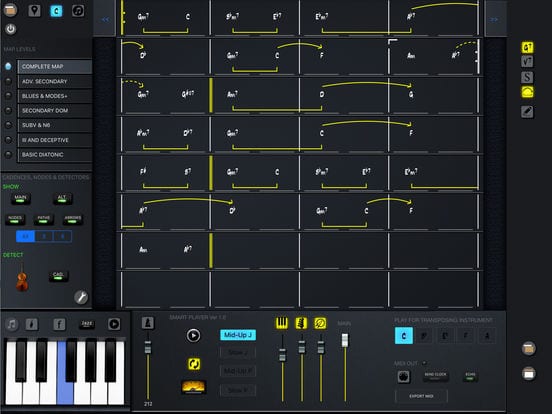
- Interactive tonal harmony mapping tool that visualizes chord progressions and harmonic functions across all keys
- Curated audio library featuring classical, jazz, and popular music standards for harmonic analysis and study
- Jazz improvisation practice modes including fake book functionality and jazz standards workouts
- Harmonic analysis tools to deconstruct the compositional techniques of master musicians like Bach, Beethoven, and Bill Evans
- Intuitive interface designed for musicians of all levels, from music students to professional composers
Pros and Cons
- Pro: Combines music theory education with real-world listening examples, making abstract concepts concrete and memorable
- Pro: Versatile tool that works for multiple music genres—classical, jazz, and modern styles all covered
- Pro: Accessible to beginners but deep enough for advanced musicians looking to refine their compositional skills
- Con: Steep learning curve for complete beginners unfamiliar with music theory terminology
- Con: Requires genuine interest in harmonic analysis; not ideal for casual listeners looking for simple ear training
Bottom Line
Download Mapping Tonal Harmony Pro if you’re serious about understanding how music actually works—whether you’re composing, improvising, or just want to appreciate what the masters were doing under the hood. It’s the Swiss Army knife of harmony apps, blending theory with listening in a way that finally makes those music lessons click.